Welcome to Get Star Weld!

Welcome to Get Star Weld!
19 Jun, 2026
Precision TIG welding punishes the wrong torch faster than almost any other process. The wrong amperage rating causes thermal shutdown mid-bead. A poorly balanced handle kills control on tight joints. An undersized cooling system turns a four-hour job into a stop-start frustration.
Most welders don't need a longer list of products — they need clarity on which torch type fits their application, their amperage range, and their working conditions. That's what this guide covers. Below are the five torch categories that consistently deliver on precision work in professional environments, along with the criteria that separate a torch worth specifying from one that will let you down.
Before getting into the categories, it's worth being direct about what precision welding actually demands from a torch — because these requirements are different from general fabrication.
Arc stability under fine amperage control. Precision work often runs at lower amperages, where arc stability is harder to maintain. The torch body, collet, and gas lens all affect how cleanly the arc holds at 30–80A on thin material.
Consistent gas coverage. On stainless, titanium, and aluminium, poor shielding gas flow introduces contamination that shows up as discolouration, porosity, or weld failure. Gas lens setups and nozzle geometry matter more here than on structural work.
Ergonomics that support fine motor control. A heavy, unbalanced torch introduces hand fatigue before the weld does. For tight joints, overhead positions, or repetitive production runs, torch weight and grip geometry directly affect bead quality.
Thermal management matched to the job. Overheating a torch doesn't just shorten its life — it changes the arc character and affects tungsten performance. The cooling system needs to match the actual duty cycle, not just the rated maximum.
With those criteria in place, here are the five torch types best suited to precision TIG work in 2026.
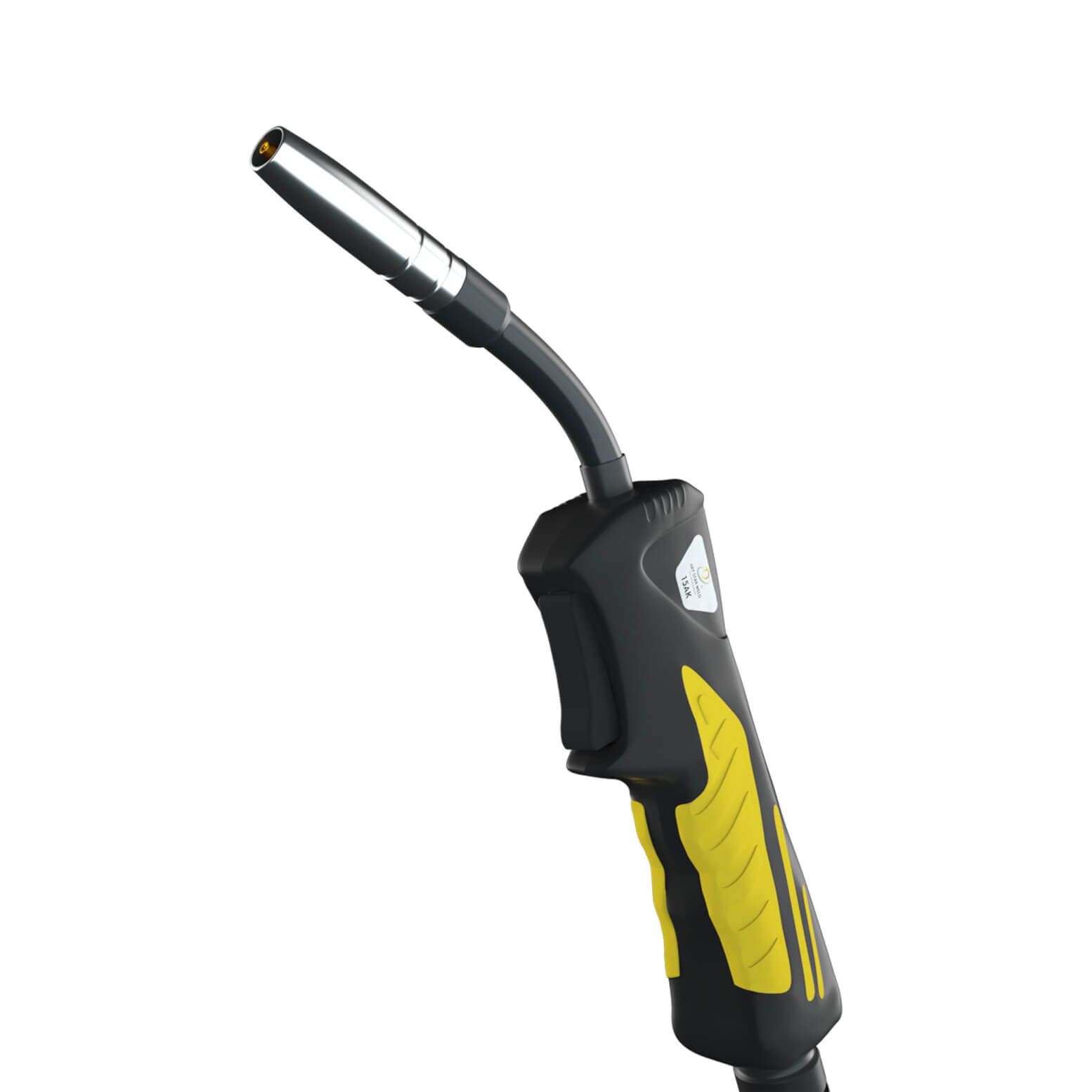
For precision work on thin-gauge stainless, aluminium sheet, or tube fabrication up to around 3mm, a compact air-cooled torch in the 150A class is the practical first choice. The smaller head diameter gives better sightlines on tight joints, the lighter cable reduces fatigue during extended runs, and the simpler setup means fewer variables between the operator and the arc.
Where it performs: Sheet metal fabrication, tube and pipe joints under 3mm wall thickness, automotive bodywork, aerospace component repair, and any application where torch access is more limiting than heat input.
What to look for:
Limitation to know: Air-cooled torches at this amperage class are rated for around 60% duty cycle in practice. For continuous production welding — bead after bead with minimal rest — move to a water-cooled torch.
The 200A air-cooled category covers the widest range of professional precision work. Material up to 5–6mm, mixed alloy work, and production environments where a water cooler adds complexity that isn't justified by the application — this is where most professional TIG welders spend their time.
Where it performs: General fabrication on stainless and mild steel, aluminium up to 4–5mm, maintenance and repair work, mobile welding where portability matters, and job sites where a dedicated water cooling unit isn't practical.
What to look for:
Limitation to know: At sustained 175A+ on thick aluminium, an air-cooled torch in this class will need rest periods. If your production schedule doesn't allow for natural breaks, the water-cooled equivalent is the better specification.
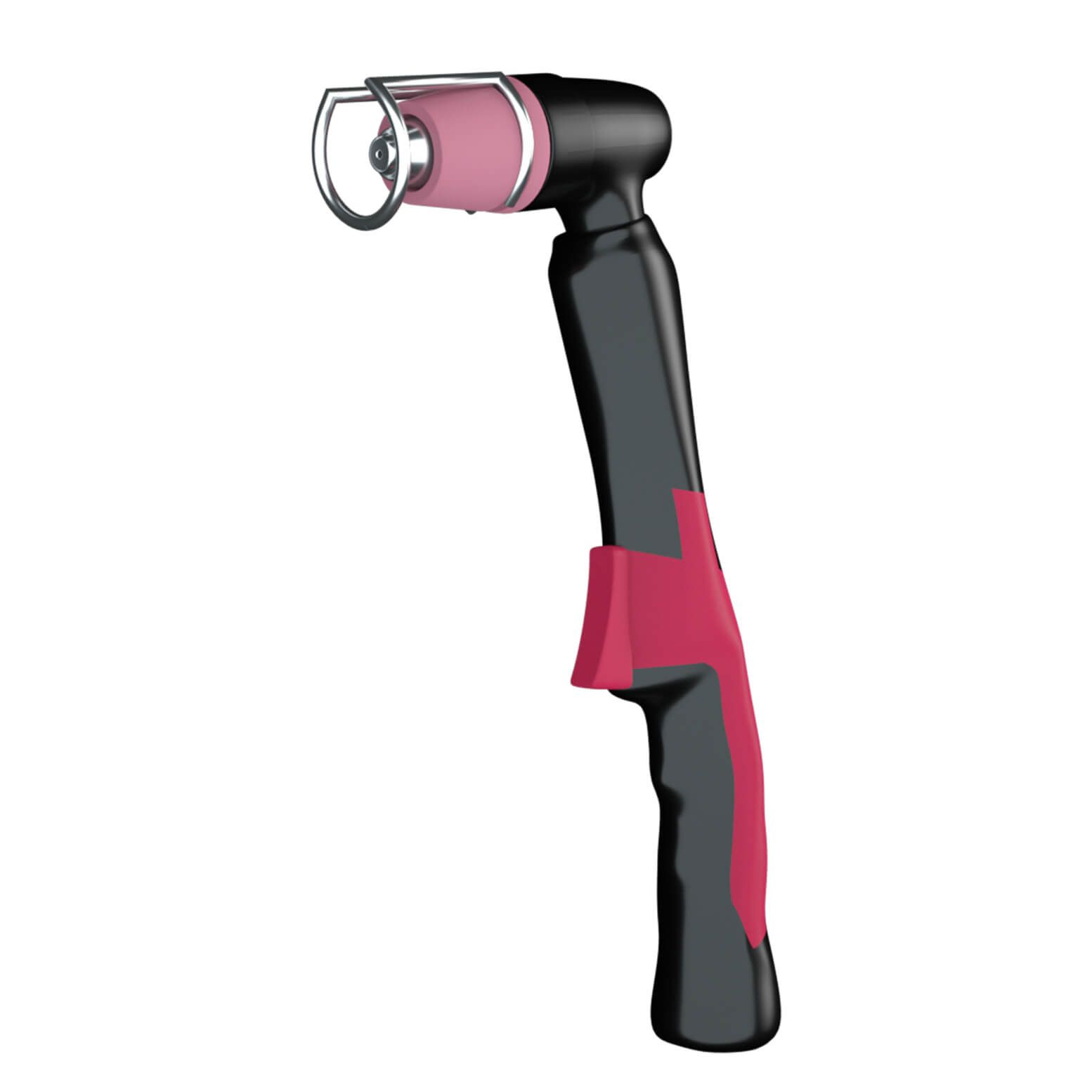
Water-cooled torches remove heat directly through coolant circulated from a dedicated chiller unit. The result is a torch that maintains consistent performance across extended high-amperage sessions — and, critically for precision work, a significantly smaller and lighter head than an air-cooled torch at the same amperage rating.
That last point matters more than it's often given credit for. A water-cooled 250A torch can have a smaller head profile than a 150A air-cooled model, because it doesn't need the mass to dissipate heat passively. On precision work at higher amperages — thick-wall stainless pipe, structural aluminium fabrication, aerospace alloy welding — water-cooled torches give better access and less operator fatigue than their air-cooled counterparts.
Where it performs: Production welding at sustained high amperages, thick-wall stainless pipe, aluminium fabrication above 5mm, certified structural work, any application requiring 100% duty cycle performance.
What to look for:
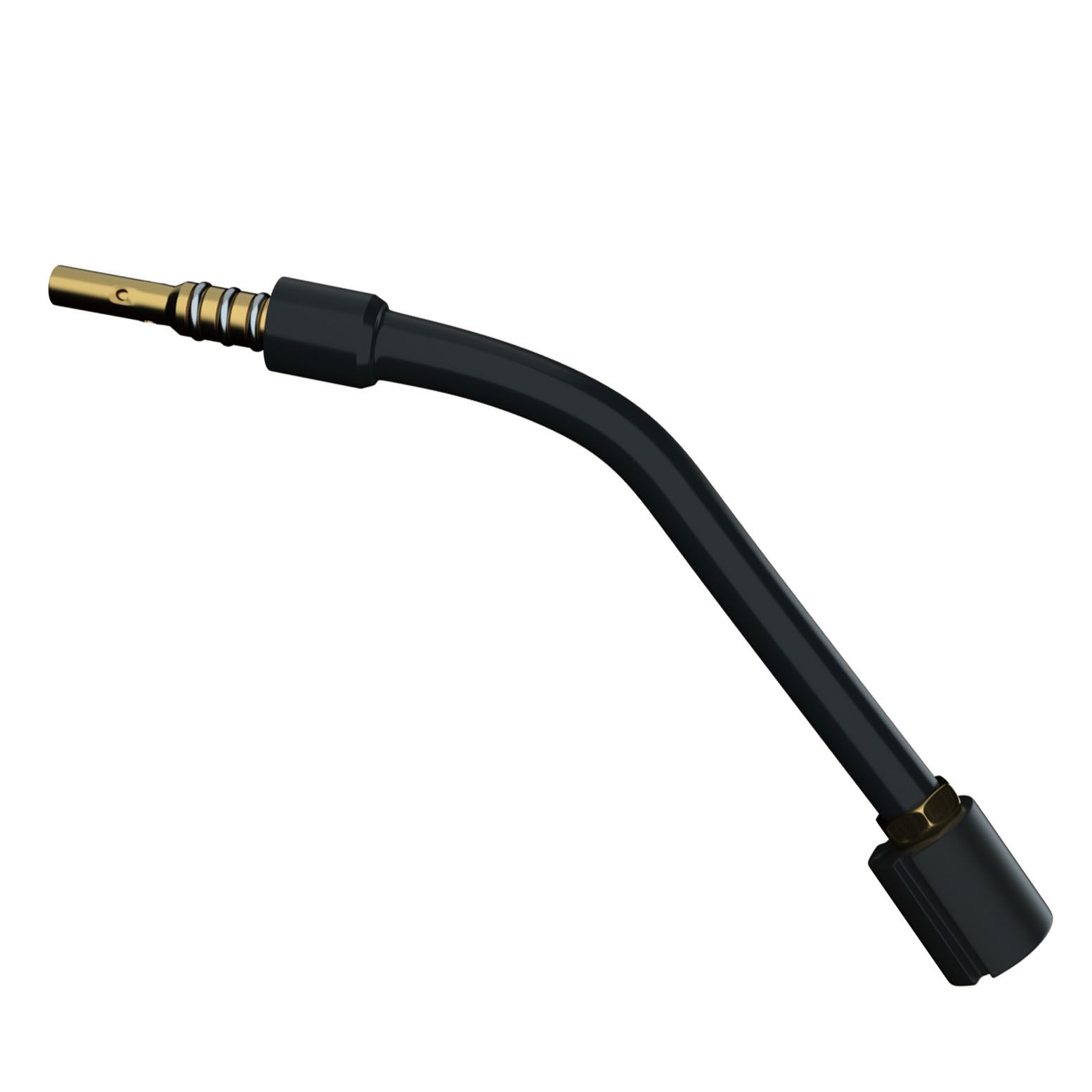
Flex-head torches — available in both air-cooled and water-cooled variants — have an articulating head that can be repositioned without tools, typically through a range of 35–40 degrees from centreline. For positional welding, pipe fitting, and any work where torch angle is dictated by the joint geometry rather than operator preference, this adjustability directly affects weld quality.
Where it performs: Pipe welding, tube fabrication, weld repairs in confined spaces, overhead and vertical work, and any joint where a fixed-head torch forces a compromise on torch angle.
What to look for:
Micro TIG torches — sometimes called pencil torches — are designed for precision work where standard torch head dimensions simply don't fit or don't give adequate visibility. They run at lower amperages (typically 50–150A), accept smaller collets and electrodes, and are specified for applications where the weld zone is measured in millimetres rather than inches.
Where it performs: Aerospace component repair, medical device fabrication, jewellery and instrument making, thin-wall exotic alloy tube welding (titanium, Inconel, duplex stainless), electronics enclosure work, and any application requiring electrode diameters below 1.6mm.
What to look for:
Professional welders who work across multiple applications often specify more than one torch type. The application, not the preference, should drive the selection. Use the following as a starting point:
| Application | Torch Type | Cooling | Amperage Range |
|---|---|---|---|
| Thin-gauge sheet metal, tube under 3mm | Compact with gas lens | Air-cooled | Up to 150A |
| General stainless / mild steel fabrication | Mid-range, ribbed handle | Air-cooled | 150–200A |
| Production aluminium above 5mm | Standard body | Water-cooled | 250A+ |
| Pipe welding, positional work | Flex-head | Air or water-cooled | Match to amperage |
| Exotic alloys, aerospace repair | Micro / pencil | Air-cooled | 50–150A |
Three questions narrow the field for any new application:
1. What is the sustained amperage, not the peak? A torch rated at 200A that you run at 190A continuously for four hours will underperform and fail early. Rate your torch to your real operating conditions, not the machine's maximum output.
2. What material and thickness? Aluminium above 5mm in production quantities needs water cooling. Titanium at any thickness needs gas lens coverage. Thin stainless needs visibility and a small head. The material dictates the torch type more reliably than any other single variable.
3. What does access to the joint actually look like? A torch that can't reach the joint cleanly — or that forces a compromised angle — will produce inferior welds regardless of its specifications. Head size, flex capability, and cable flexibility are access variables, not comfort preferences.
The torch body is only part of the system. Consumables — tungsten electrodes, collets, collet bodies, nozzles, and back caps — determine how well a torch performs in practice.
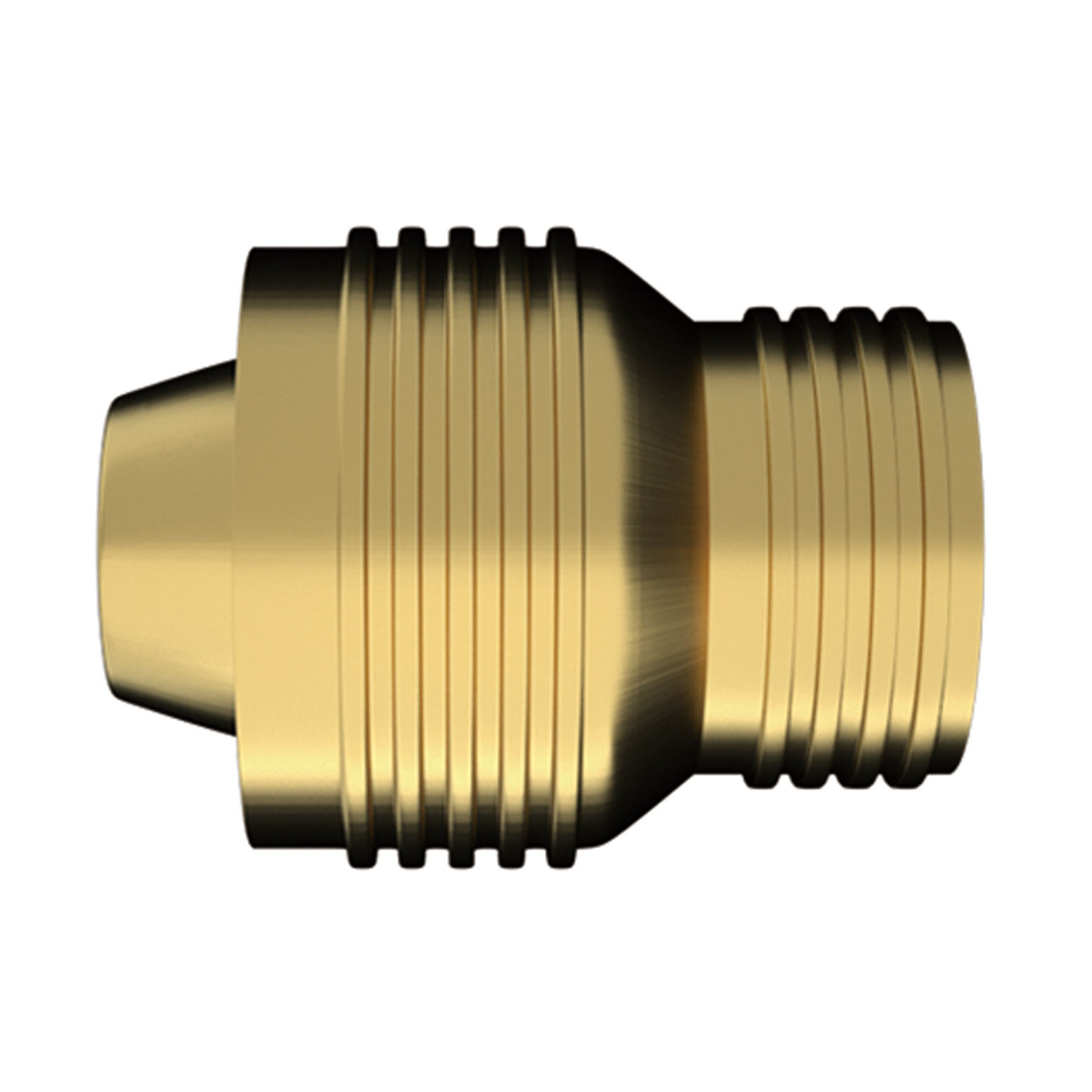
Gas lenses are the single highest-impact consumable upgrade for precision work. They replace the standard collet body with a fine mesh screen that produces laminar gas flow instead of turbulent flow. The result is better shielding coverage at lower gas flow rates, reduced contamination risk, and the ability to extend the tungsten further from the nozzle for better joint visibility. On stainless, titanium, and aluminium, a gas lens setup is standard practice in professional environments, not an optional extra.
Nozzle material matters more at higher amperages. Standard alumina ceramic nozzles are adequate for light work but crack under repeated thermal shock at high amperages. Lava nozzles handle thermal cycling better. Gas lens nozzles, which are larger in diameter to accommodate the lens body, provide the widest shielding coverage and should be the default choice for precision alloy work.
Tungsten electrode preparation directly affects arc stability. On DC welding processes (stainless, mild steel, titanium), a freshly ground, pointed tungsten with the grind marks running longitudinally — parallel to the electrode axis — produces a more stable arc than a blunt or cross-ground tip. This matters particularly at the lower amperages used in precision work.
The right TIG torch for precision work isn't the one with the highest amperage rating or the longest feature list. It's the one that matches your actual operating amperage, fits the joint geometry you're working in, and maintains consistent arc performance across your real duty cycle.
For most professional precision welding, a compact or mid-range air-cooled torch with a proper gas lens setup covers the majority of applications. Water-cooled torches are necessary for sustained high-amperage production work and deliver a meaningful head-size advantage that improves access on complex geometry. Flex-head and micro torch variants solve access and visibility problems that no amount of operator technique can compensate for.
Lorem ipsum dolor sit amet, consectetur adipiscing elit. Suspendisse viverra mauris eget tortor.